

Color Blind, Lyric Deaf
and the search for meaning in art.

Now to be clear, I am not color blind. But I am lyric deaf. Let me explain:
I am a music enthusiast. For the first [ambulatory] 20 years of my life I played several instruments and spent a decade traveling the world with a band of miscreants. This was my first “career”, long before I knew anything about painting. I am always listening to something, and I provide passionate (and quite unsolicited) music recommendations to almost everybody I know. All of this to say that I am not a casual music listener. I am serious about it. I simply cannot hear lyrics.
Which is not to say that vocals are unimportant, but I hear them as another instrument. Phrasing and melody and the sound of the instrument all matter, but the actual lyrics, in as far as what the song might actually be about? I have no idea. And I don’t much care. This applies as much to my favorite songs as any other. I could recite a good portion of the words from songs I’ve heard thousands of times, but I would be imitating their sound, with no regard for the words themselves and what they might actually mean when strung together in a sentence. And they would most assuredly be incorrect.
My father and sister are the same way, and every once in a while I meet somebody who shares our affliction. This is why I liken it to color blindness. We are unaware anything is amiss, just as my friend Matt Bettinelli-Olpin is with the color wheel. You can tell him something is red, and he can remember the assignment and masquerade quite well as somebody with functioning rods and cones. I can read a lyrics sheet and appreciate the artistry, but apply music, and all I hear is music — the meaning behind the words is almost entirely gone — and then I’m the guy relaxing to a song about infanticide.
To be clear, I am pretty happy to be lyric deaf. Undoubtedly this contributes to (or facilitates) my love of certain music genres, where the vocals sound closer to a distorted guitar or malfunctioning garbage disposal than anything that should be coming out of a human’s mouth. I can listen to lyrics in foreign languages and barely notice. And I can very much not listen to those artists that might put a bit more emphasis on their lyric writing than their vocal prowess (see Bob Dylan). I suppose the lyric-deaf miss out on some aspects of popular music but I can’t help but think we also might appreciate the music of singing more — uncomplicated by poetry and sentiment.
Now, how is this of any relevance to visual art? In short, it isn’t. But if Lyric Deafness is a real thing that I have [it is, and I do], then I have another unrecognized syndrome to present and explore: let’s call it, “meaning impairment”. As defined in the Official Index of Potentially Fictional But Probably Factual Mental and Physical Disorders Vol 2 [by yours truly], the ‘meaning impaired’ are mostly apathetic and unaware of the meaning behind visual art. How I feel about a particular painting is almost entirely that; feeling. Aesthetics and execution are nearly everything. I am interested in what a painting might be about to a point, but it has almost no bearing on how I might feel about it. It becomes a fun fact, a tidbit — potentially interesting but in no way influential.
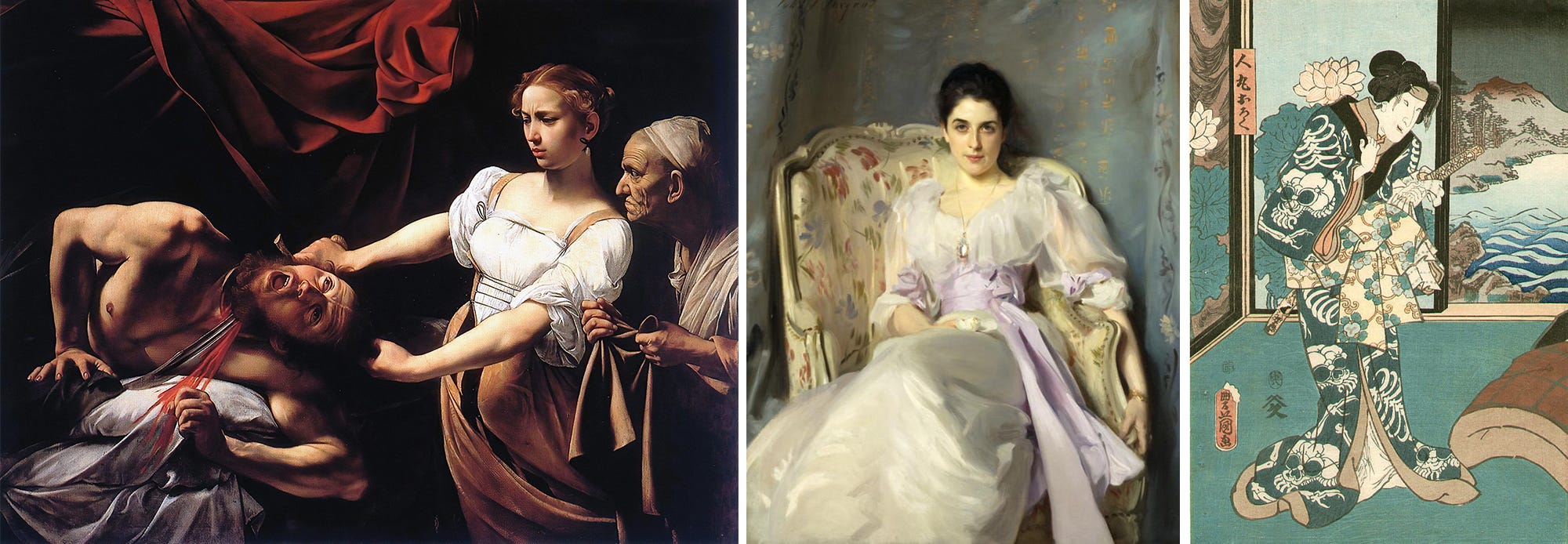
Being ‘meaning impaired’ goes a long way to explain my life-long interest in religious art, where majesty and foreboding imagery deliver the feelings I’m always trying to chase in my own work, even with the knowledge that they are based upon theology that I find repellent and ridiculous. As a matter of fact, the vast majority of my favorite art: religious paintings by Caravaggio, portraiture from Sargent, Kunisada’s Ukiyo-e prints, etc. all have this thing in common; they were pretty obviously painted with a very specific reason in mind — a reason that remains not at all relevant to me in my appreciation of the work.
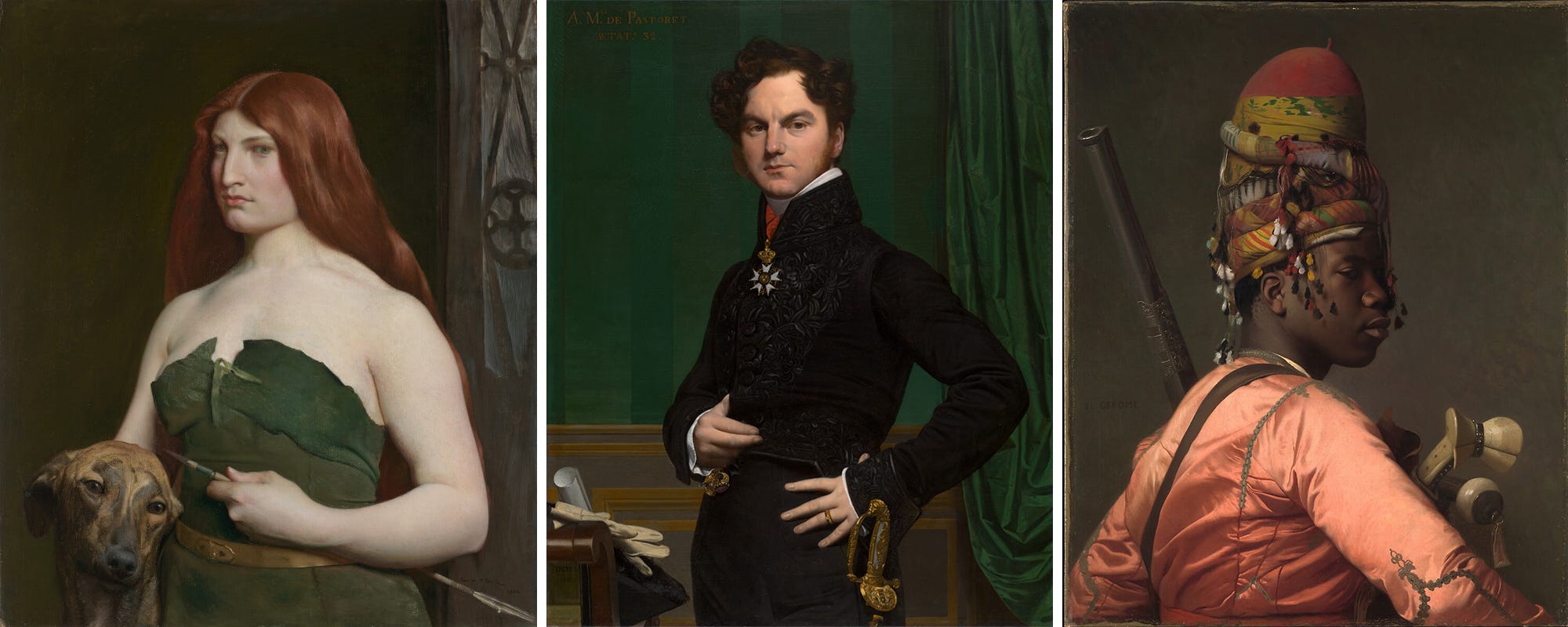
As with Lyric Deafness, this state is entirely natural for me. It would never have occurred to me that it was in any way unusual if not for my 22 years as an oil painter. Every single figurative painting I've ever done, from portraiture to more elaborate attempts at narration, seems to provoke the same question from viewers at some point or another: “who is that?” Despite the regularity, I’m surprised every time. [And if I were less polite, the answer would always be: “She is the subject of this painting.”]
I realize how this all might sound to the unaffected, to those that revel in a back story or the provenance of a subject. And sometimes I wish I could relate, much as it might be nice to know what Davey Havok is talking about. Meaning Impairment isn’t an excuse to be lazy or uncaring, and I’m pretty sure it isn’t what might amount to some sort of artistic user error. As with the lyrically deaf, I suppose I am also missing out on aspects of those paintings that mean the most to me, that inspire me to spend a good portion of my time chasing some semblance of the same mastery. But might the Meaning Impaired also have a more distilled appreciation for the final product? Uninfluenced by dogma, propaganda, proselytizing, or the subject's personality? I think we do.
I'm color blind, but also really opinionated about color. We see color, but not the same colors as most folks. I am the opposite of lyric deaf, I love lyrics, love the way the story, the melody, and the harmony create emotion and release. I think these variations are just aspects of our humanity. By the way, I played with a great singer who was lyric deaf, he would read the lyrics as he sang. Jim: "Lets do 'This Masquerade' as the bride and groom's first dance" Me: "Jim, the first line is 'are we really happy with this lonely game we play?' maybe not the best choice"
I've always felt the same with lyrics, nice to give it a term. I'm also colour blind 😅