

A Swing and a Miss
When it’s time to trash a painting.

In many ways, being an artist — both the occupation and the inescapable state of being — is hard. For the uninitiated, and with respect to the occupation specifically, imagine yourself to be a salesperson of a product that is both immensely personal and important to you. A product whose creation took many years to learn. A product that is, in all practical senses, not at all necessary and, in the grand scheme of things, of very limited appeal. What makes you competent in this product's creation is also what makes you a compromised salesperson — not to mention that the modern marketplace for your product is constantly changing and predominantly controlled by faceless corporations and their robot armies. Now, also imagine that the very act of thinking about your product as a product (ie. something you are trying to sell) will likely both affect the quality of said product and remove any fun from its creation — which is kind of why you got into it in the first place. I could go on here, but you get the picture.
You know what isn’t that hard though? Painting! Relatively speaking, the arting itself just isn’t that hard. Achieving some level of technical proficiency takes time, yes, and developing a unique perspective or style can be a super long road, but the act of moving goo around a canvas to satisfy a need to make something is not difficult in itself. [This is why no artist understands that most common of banal phrases: “I can’t even draw a stick figure”. The only thing preventing one from drawing a stick figure — or anything else for that matter — is the desire to actually draw one, and draw it again, and draw it again. It’s much like lifting weights. A good portion of the challenge is getting yourself to a gym; learning your way around once you’re there is easy enough if you make the time.]
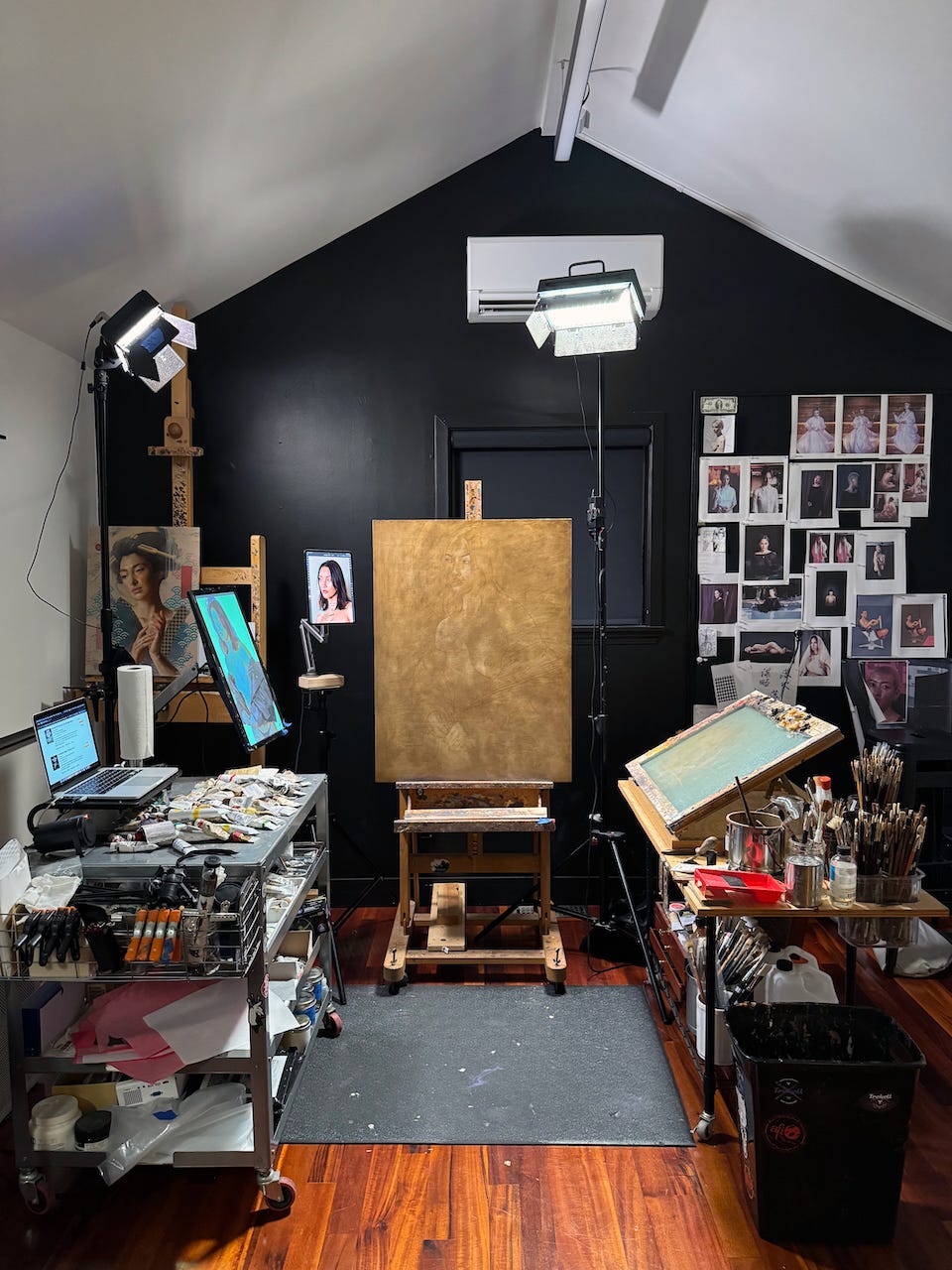
The exception to all this postering is when one might need to push through a plateau. The ambitious artist might occasionally have to abandon what might be more comfortable and seek a little torture in the studio. Force a little progress. This might result in a great new painting, but it also might not. Actually, it probably won’t. The trick is learning along the way regardless. To further beat that gym analogy into the ground, this is the artistic equivalent of a failed rep. Even if you end up in a crumpled heap, there is progress to be made. What went wrong, along with what might have gone right, is important. The simple act of keeping this in mind will also make what is ultimately a huge disappointment seem just slightly less dire.
Earlier this year, I found myself in the unfortunate and all too familiar position of not knowing what I wanted to paint. Or more accurately, I knew what I wanted to paint but was unclear how I actually wanted to paint it. Planning and decision making, or the planning of decision making has always been my achilles heel, and it’s easy for me to slip into an endless feedback loop of available options. So my plan in this particular instance was to take some familiar territory, figures and text and such, and approach them differently. Bump things up to a size I usually don’t work with, compose the canvas in a way I normally wouldn’t, and use some colors I don’t normally use. Nothing crazy, but enough new ideas to get me excited about it. In retrospect, I either didn’t take enough chances, or took too many at one time. Either way, it did not go well.
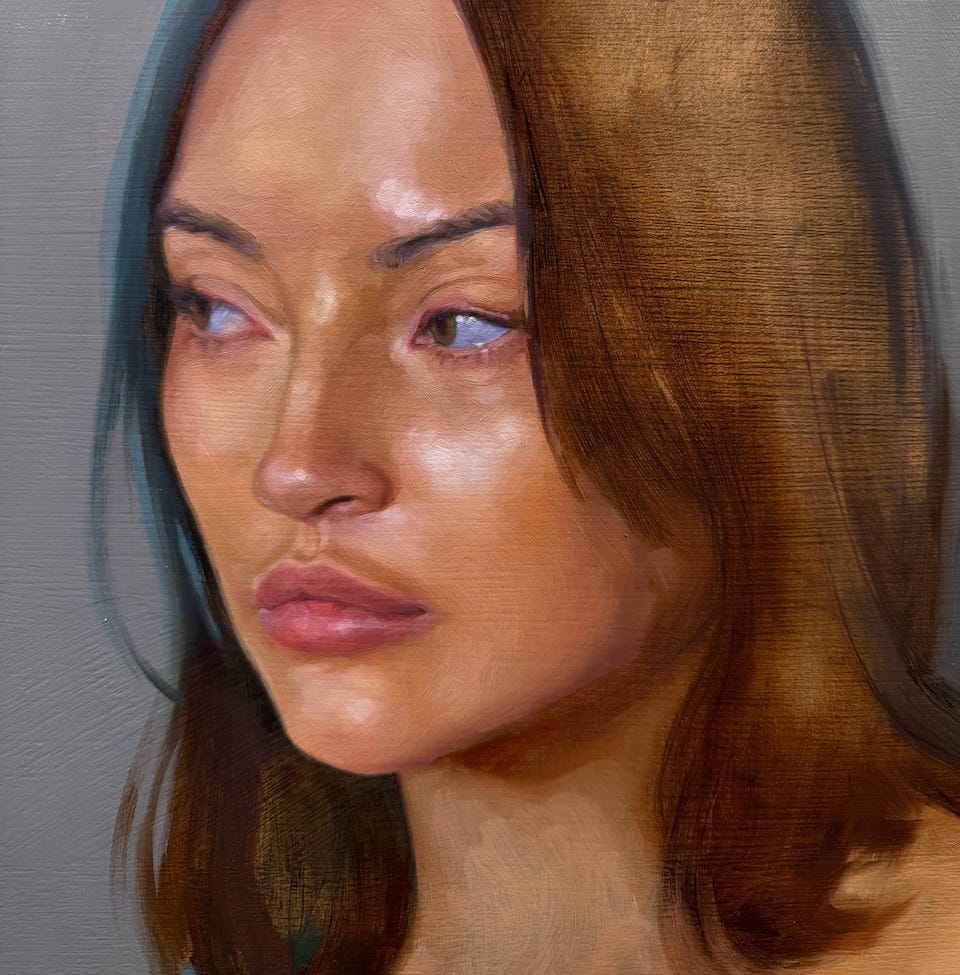
One of the more important lessons I’ve learned in the last several years is that, regardless of how a painting is going, it is going to look pretty bad until it is very far along. This is both a consequence of the more layered approach I’ve been using of late, and my own tendency towards over analysis. So I try not to evaluate too critically how something is looking for a good portion of the process, lest I give up on something that might have potential. [I should note that this is much easier said than done. It takes a lot of patience and a seemingly delusional belief that I’m going to be able to pull something so far along the path of improvement. For a good portion of every painting, that path seems treacherous at best.]
The downside to this approach is that when a painting isn’t ultimately worth sticking with — which is thankfully not that often — I’m several weeks or months in before I finally realize it. This is a very roundabout way to say that I recently spent over two months on a painting that will now be relegated to the recycler. This was one of those plateaus, and I did end up in a heap. I am the recycler.
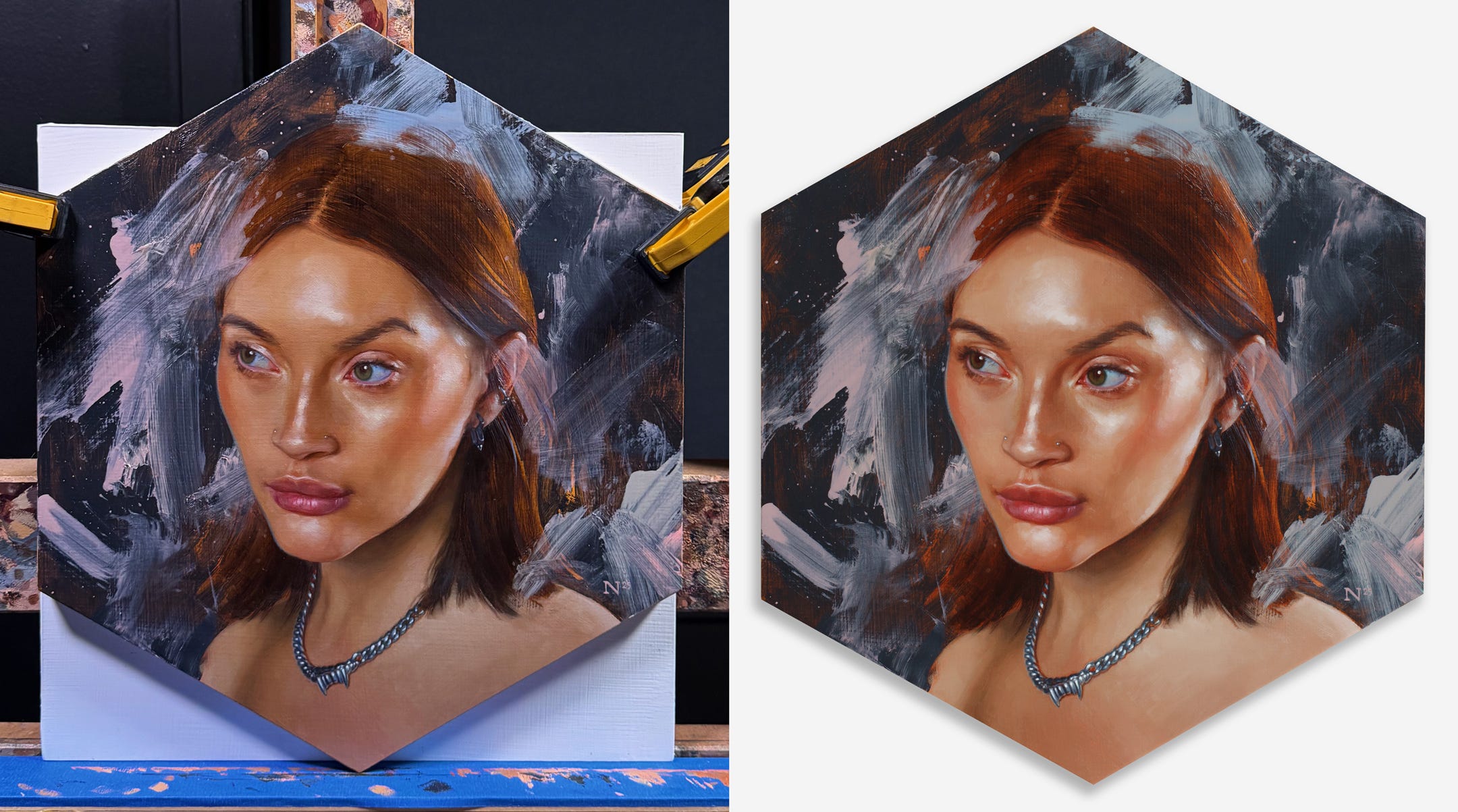
So what did I learn? Aside from the fact that this particular combination of composition and scale is a no go — think oversized illustrated movie posters from the 60s but done poorly — I learned something important about background. Because of limitations with respect to my photoshoots (and I suppose, also my imagination) I often go into paintings unsure what will surround my subject. I’m lacking a particular plan for the environment my painted subject might exist in, since the subject of the reference photography usually just exists in my house. In many cases this is totally fine. I focus on the figure, and especially for the more portrait-like paintings, the setting seems less important — or rather, I can substitute what exists in the photo reference with something that serves the painting in the most passive way possible. See there? This tendency of mine to minimize the importance of the background is exactly the problem. Everything is important. The same way an improperly painted lip can ruin a face, an inappropriate background can ruin a foreground. Problem identified.
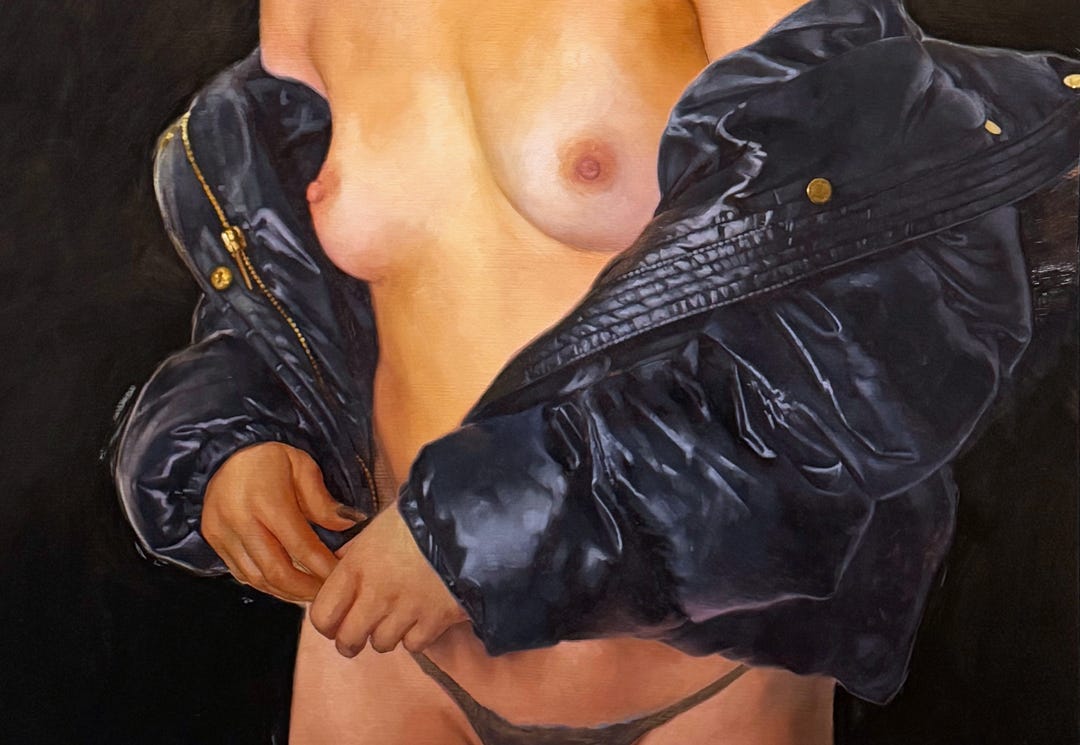
Now in this particular instance, there was a lot more wrong with this crap painting than my lack of background attention. But the background was a problem. And as I worked away the weeks, with a growing suspicion that the painting was headed in the wrong direction, I tried to problem solve. Despite the end result, I did solve the background problem, even if it didn’t save that particular painting.
So after a number of hours that I will not even attempt to calculate, I am an ever so slightly better painter with no painting to show for it. But I have some good ideas for the next one.
It's interesting to see into another persons process.
Right, agreed!